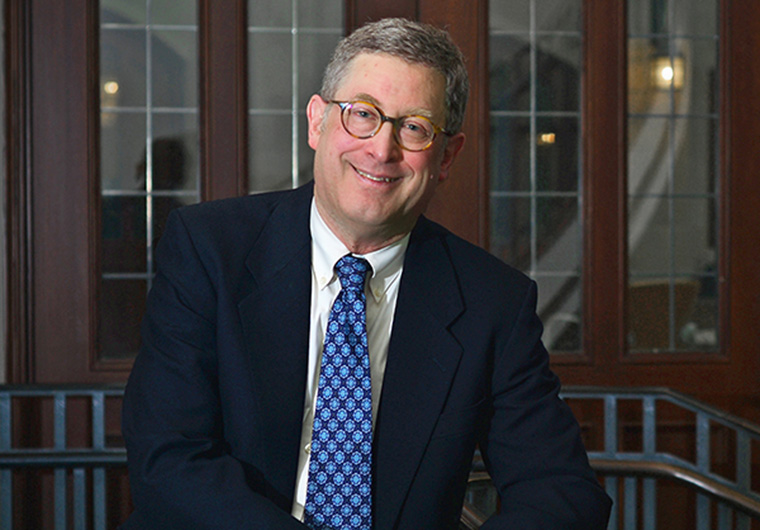
WashU Expert: Replacing Chevron would have far-reaching implications
There is no good reason to abandon the Chevron deference, a landmark Supreme Court decision in place for 40 years that says courts must defer to federal agencies’ expertise in interpreting laws, according to an expert on administrative law and regulatory reform at Washington University in St. Louis.
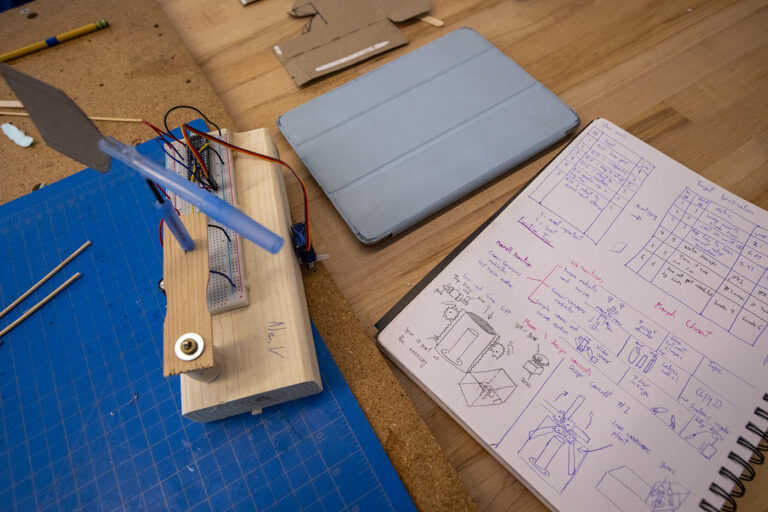
‘Elegance in simplicity:’ A prototype is born
Students in the McKelvey School of Engineering at WashU designed prototypes for a device that could help environmental engineers monitor the air quality impact of factory farms in Missouri.
Center for the Environment welcomes campus community during kickoff events
Washington University in St. Louis’ Center for the Environment, a key initiative of the university’s strategic plan “Here and Next,” will host a weeklong series of kickoff events next month designed to encourage the entire campus community to become more familiar with WashU’s work to advance environmental research.
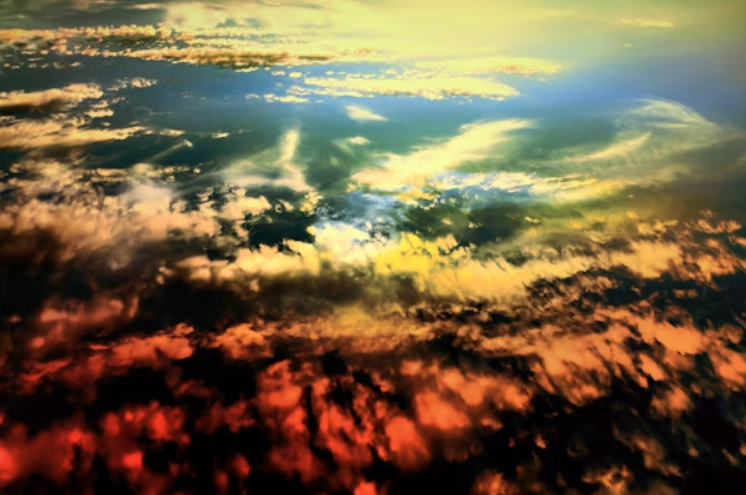
Guérin wins grant to enhance atmospheric simulation speed
Roch Guerin, professor, and collaborators received an NSF grant to improve speed of GEOS-Chem, a 3D atmospheric simulation software designed to study climate change.

Naseh Lab: Climate Change and Forced Migration
Research Focus It is estimated that by the end of 2023, approximately one in every 28 individuals worldwide will reside outside their native country, and over one in 69 people will have experienced forced displacement. These staggering numbers continue to surge annually due to the compounding factors of climate change, ongoing wars and conflicts, and […]

Liu Lab: Food Globalization in the Bronze Age
Research Focus There has been considerable development in understanding food globalization in the Bronze Age when dispersals of crops and domesticated animals linked people from far-flung locations in a series of connections that spanned the Eurasian landmass 7000-3000 years ago. Liu’s lab is one of the leading groups globally contributing to this recent momentum. We […]

Jacobs & Multimodal Vision Research Lab: Computer Vision for Ecology
Research Focus The field of computer vision has dramatically changed in the past ten years, making it possible to automatically extract detailed information from vast sets of images. While challenges remain, this presents an opportunity to improve our understanding of earth processes and their impact on plants and animals. The Multimodal Vision Research Laboratory (MVRL) […]
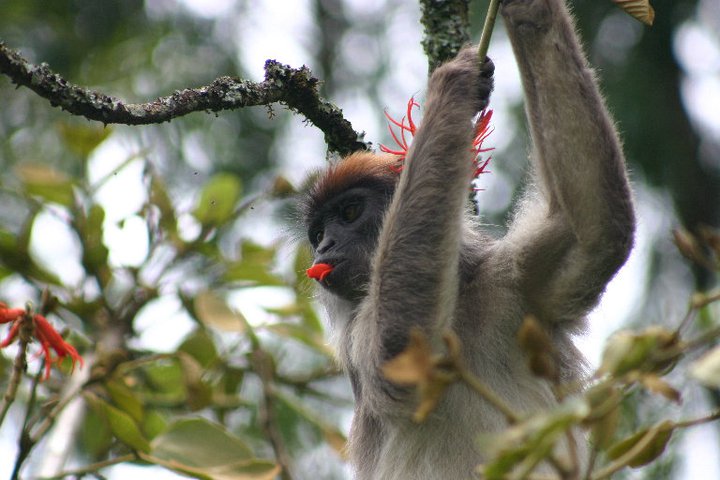
WashU team to study virus transmission, human-wildlife interaction
Red colobus monkeys are the most threatened group of African monkeys. A Washington University in St. Louis team will model viral transmission dynamics among red colobus monkeys and their human neighbors near Kibale National Park, Uganda. The collaboration got its start with support from Arts & Sciences under its Incubator for Transdisciplinary Futures research cluster, “The Human-Wildlife Interface.”
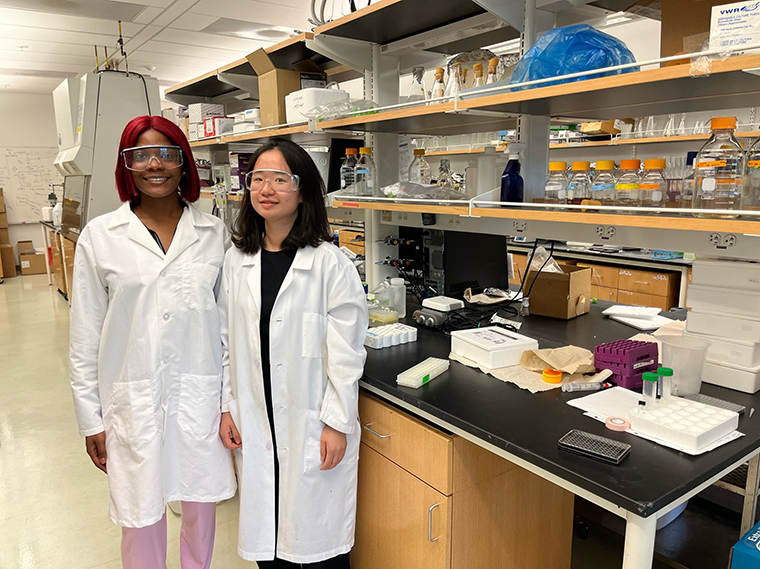
WashU students contribute to biomanufacturing in space
Many kids dream of being astronauts when they grow up, but Millie Savage is contributing to something bigger: helping future space explorers manufacture their own supplies in space conditions.
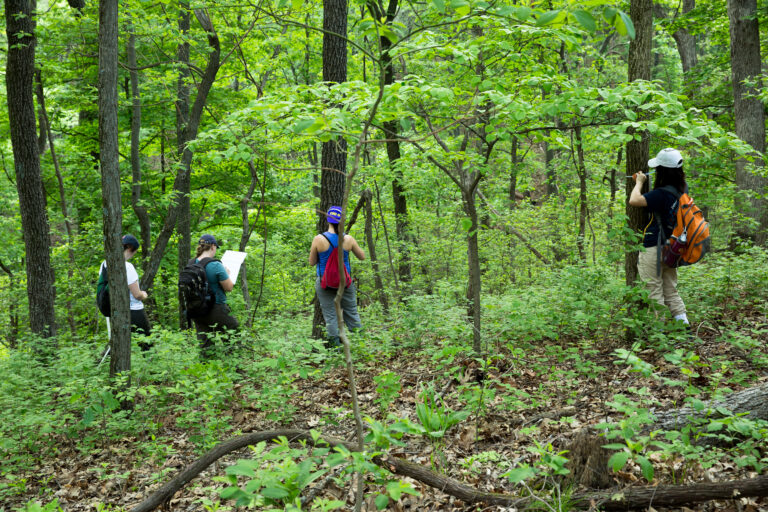
Roots of diversity: How underground fungi shape forests
A large study involving 43 research plots in the Forest Global Earth Observatory (ForestGEO) Network — including a swath of trees at Tyson Research Center — has helped clarify the power of underground fungi to shape forests.