The Center for the Environment is an interdisciplinary hub of environmental research that is committed to generating transformative solutions to our deepest societal challenges including: climate change, air pollution, access to clean water, food insecurity, biodiversity loss and infectious diseases.
By the numbers
145
Center scholars
46
Proposals/Grants supported
1000+
Activity participants
The Center’s mission
The center serves as a cross-cutting collaboration hub, encouraging partners, faculty and students to advance research projects in areas including biodiversity, environmental justice, planetary health, environmental solutions, and climate change. Here’s a closer look at who we are, what we do, and why it matters for our community, our region and our world.
Connect with us
Upcoming Events
Featured research & stories
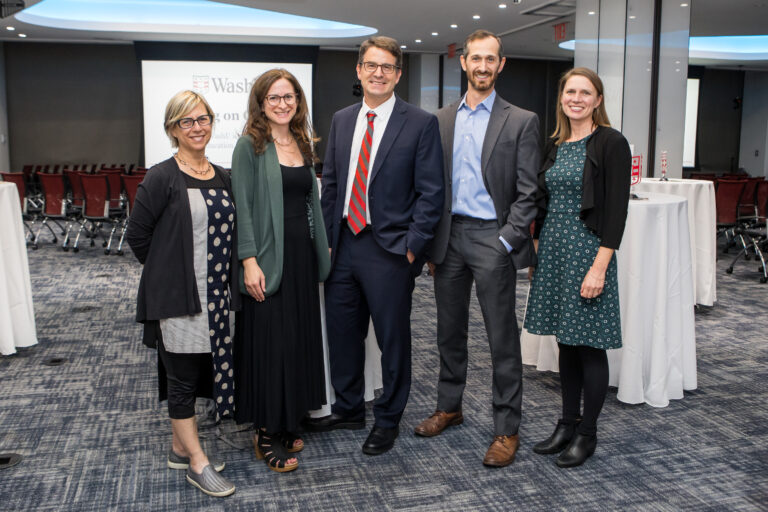
Climate Week NYC: Leading on Climate
The Center and University Advancement brought together more than 100 WashU alumni, parents, and friends for a panel that showcased how WashU is advancing research, education, and partnerships to address the climate crisis.
Alumni Spotlight: Nicholas Thornburg
Nicholas Thornburg’s BS ’12 career advancing chemistry and technology to foster energy growth started at WashU in the fall of 2008 with a curveball.
Air Quality and Health Initiative Research Spotlight: a case for collaboration
A simple question brought together two separate areas of deep, complex expertise to advance critical research: does anyone at WashU research air quality?
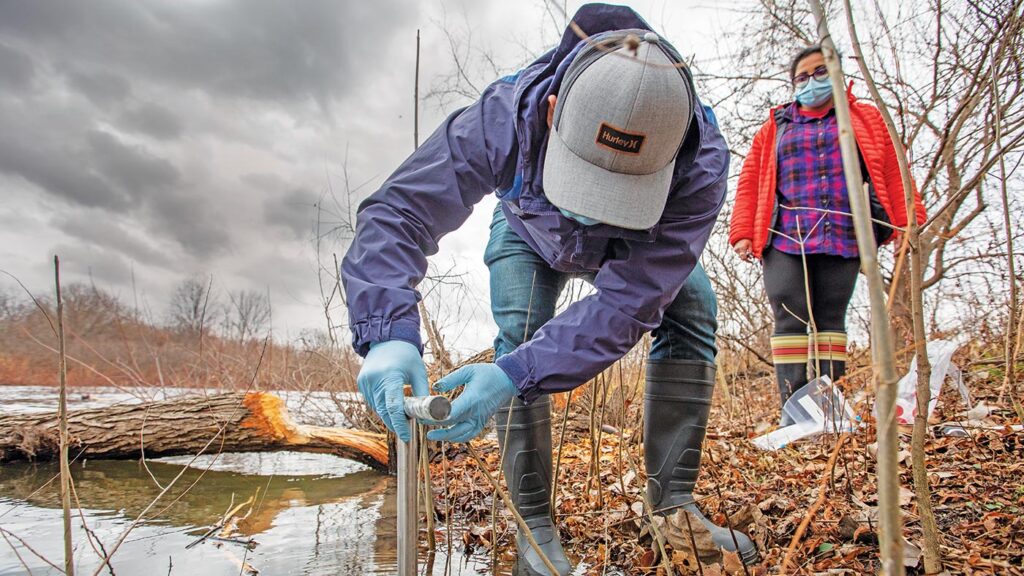
The WashU ecosystem
Within the WashU ecosystem of environmental research, education, and practice, the Center for the Environment serves as a connector. Much like a biodiversity corridor, we work to create space where our partners within the ecosystem and across distinct disciplines come together to address our world’s biggest environmental challenges.
In the news
Decoding the Meow: What Your Cat Is Trying To Tell You
Cats don’t meow to each other—so why do they meow at you? The answer is a conversation thousands of years in the making
NIH revives network to study emerging diseases—but its new restrictions baffle scientists
Ban on hunting for new viruses in wildlife is at odds with program’s mission, researchers say
Kelvin wave incoming: Why the US should care
A massive pool of warm water moving toward the West Coast could raise sea levels and worsen flooding in California this winter as a powerful El Niño continues to strengthen, scientists say.