
Research Focus
Heavy metals in water harm ecosystems and public health, yet many of these metals are also valuable resources. Our lab designs porous materials that can pull metals like copper and nickel out of contaminated water, then release them for reuse. The core materials are metal–organic frameworks (MOFs), which are molecular-level “crystalline sponges.” We pair modern materials chemistry with machine learning to pick the best candidates quickly, then make and test them in the lab.
You will learn how to synthesize MOFs, measure how much metal they capture, and study how to regenerate the material so it can be used again. You will learn to run batch uptake tests and analyze data to compare performance under realistic conditions such as variable pH and competing ions. If you enjoy coding, there are optional mini projects to help screen candidates on a computer before we make them.
Skills, Techniques, Methods
- Chemical safety and good lab practices
- MOF synthesis and purification
- Surface area and porosity measurements
- Data processing and curve fitting of adsorption isotherms
- Scientific writing and data reporting
Research Conditions
This is an on-campus, hands-on project in a wet lab with some office-based data work. Expect roughly 50 percent lab experiments, 40 percent data analysis and reading, and 10 percent facility visits for characterization. All students complete general and lab-specific safety training before independent work. You will have bench space, shared instruments, and access to campus user facilities as needed. We aim for a collaborative, supportive environment where questions are welcome and progress is shared openly.
Team Structure and Opportunities
You will be paired with postdoc mentor Dr. Shyam Chand for wet lab guidance, meet weekly one-on-one with Prof. Zheng, and join group meetings for feedback. We collaborate with Prof. Young-Shin Jun (EECE, McKelvey Engineering) for testing, so you will see both materials synthesis and water chemistry perspectives. Early tasks are guided, then you will define a focused mini project such as optimizing regeneration conditions, comparing two MOFs, or testing performance with a real-water matrix. You will present a short update mid-summer and a final summary at the end.
Requirements
Chem 105 or 111A
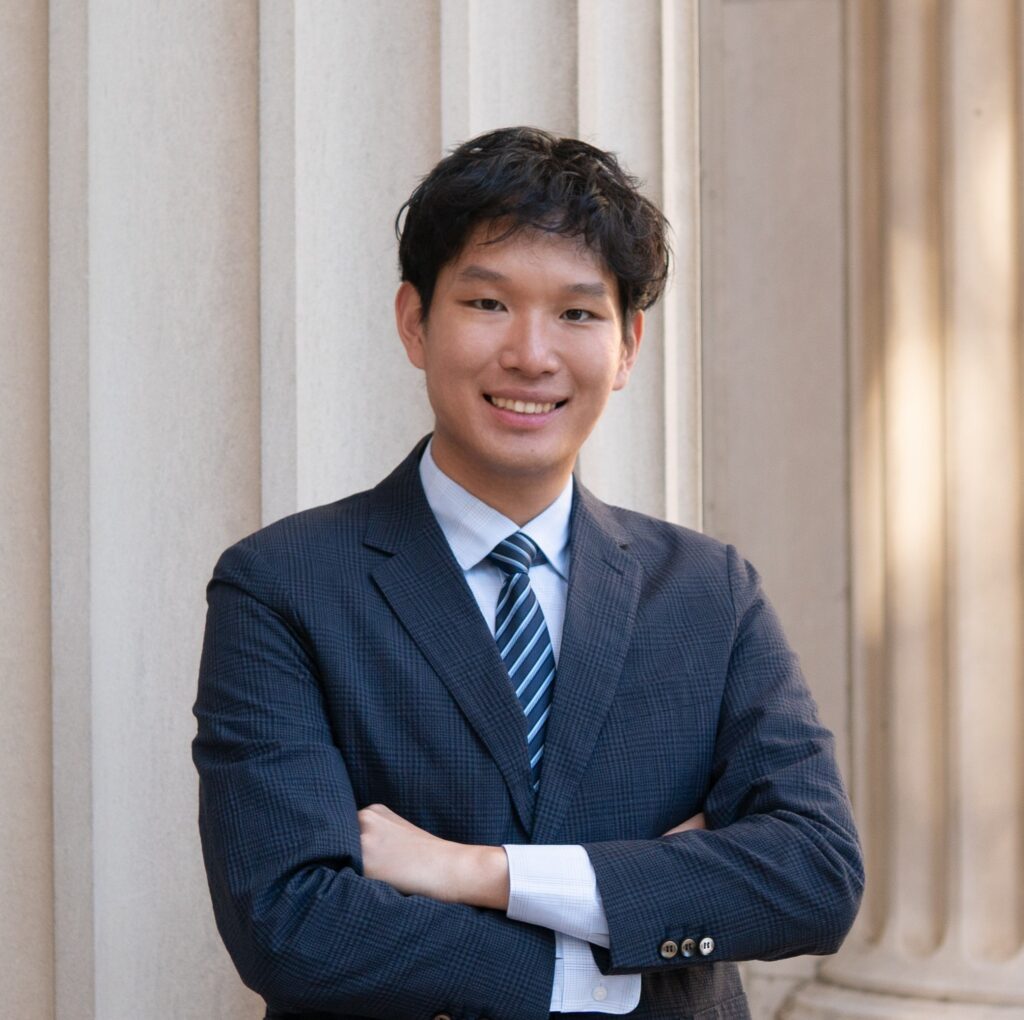
Zhiling Zheng
z.z@wustl.edu